My Child Is Using ChatGPT for Homework: What Should I Do?
Sia Arora
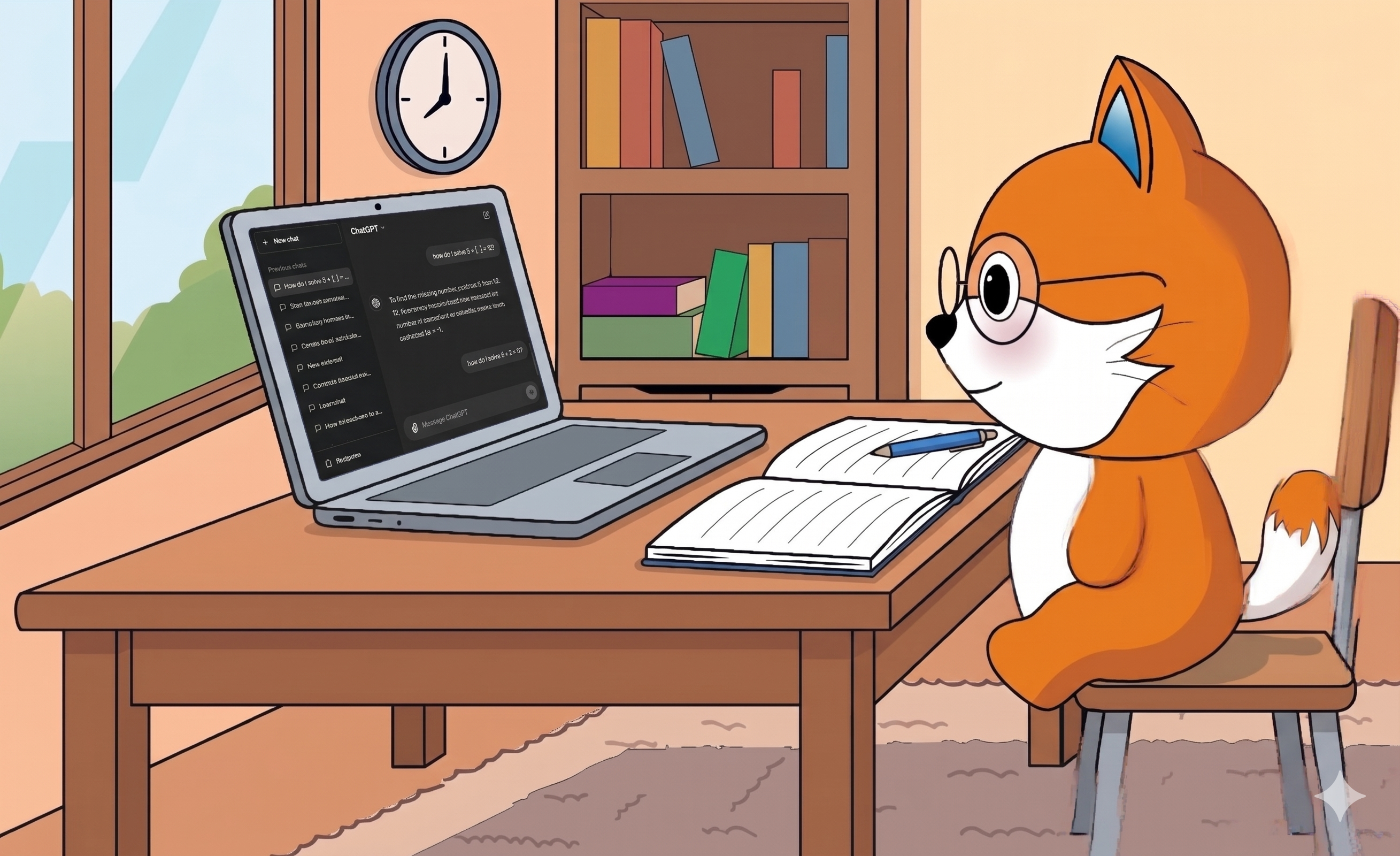
There’s no denying that AI has had a huge impact on the world, especially on children.
While AI is a great tool for efficiency, not every task needs to be done by AI. This is especially true when it comes to your child’s homework. But topics like this require careful handling. If you don't help your child understand the true effects of using AI, they might continue to use it.
In this blog, we’ll help you understand how to address this issue and how you can build a healthy relationship between your child & technology. So let’s get started!
What You Need to Know First
AI, like many newer technologies, is in itself an incredible invention. It made headlines by detecting cancer in patients that even doctors didn’t notice, and it has solved math problems that were thought to be unsolvable. But just like any other technology, in the wrong hands, it can cause problems.
The first chatbot, ELIZA, was created by a professor at MIT named Joseph Weizenbaum, who ironically, spent the rest of his life warning people about the negative effects of using AI. He realized that programs like his ELIZA chatbot could "induce powerful delusional thinking in quite normal people", for which the term “AI Psychosis” exists.
The technology is controversial because of three things: a) prolonged use of this technology has been linked to lower brain connectivity, reduced memory and recall, a decline in critical thinking and diminished creativity; b) the companies that run these tools don’t seem to care about addressing the consequences or warning people about them; and c) there are also several environmental concerns, which is a whole topic in itself.
So, AI is good as an invention, a feat in technology & genuinely useful in some cases. But it’s being pushed in places where human creativity is more valuable & much needed.
Why does your child use ChatGPT for homework
According to ITS Education Asia, 70% of children don’t like homework. Many children treat homework like a chore not because it’s school work but because it’s mundane and not stimulating.
Most school work expects the same from every child, answer the question, copy the paragraph from the book, write neatly & submit. There is no space for the child to have their own thoughts, ideas or views. Due to this, homework feels like a chore rather than a learning opportunity outside of the classroom.
Even in assignments where they have to think on their own, like solving math & physics questions, children end up using AI due to a lack of support from teachers & the absence of personalised tutors who can explain concepts to them they personally find hard to understand.
Not engaging in homework isn’t about being lazy; it’s about not feeling interested. From birth kids are specific about where their attention goes. A toy that doesn’t interest them gets left behind for another they like. A movie they don’t understand is switched to a cartoon channel they find fun.
Except in this case, they are expected to do the things they don’t want to do. When you say things like, “First finish your homework and then you can do whatever you want”, kids begin to see homework as an obstacle that they need to pass through to do whatever they want.
And so they do what they whatever they can to get through that obstacle as fast as possible.
So when you ask them to do their homework, they don’t hear “Do your homework.” They hear “I’m not going to let you do the things you want to do until you finish this task.”
Sounds a lot different now doesn’t it?
As a parent, instead of questioning your child’s behaviour, try stepping into their shoes and understanding where they’re coming from. You might think you know and understand everything, but their little world is a lot more complicated than just “knowing” them.
This is one of those behaviours.
How to talk to your child about using AI for homework
Now that you understand why your child uses AI for homework, let’s tackle how we can actually solve this problem. And the first step is a conversation.
First of all, yelling at them does not solve the problem; it only makes it worse. You’re supposed to sympathise with your child, not order them around. Remember, you’re a parent, not a dictator.
Sometimes children don’t realise the complexity of the tech they have access to. Try explaining the problems of long-term use of tools like ChatGPT. It can help them understand that your questioning comes from concern, not anger.
Find out why they turn to ChatGPT
Tell your child that you know they use AI for homework. If they try to defend themselves, simply tell them you’re not mad, just worried that they might not be retaining what they’re learning.
And when they admit it, ask them why they do so,
Did the other kids in the class tell them to?
Did they want to finish their homework quickly?
Was there a concept they didn’t understand?
Do they not like studying the subject?
Let your child put their guard down and actually listen to them before you say anything. Problem-solving is more about hearing than speaking. It’s not you against your “lazy” child, but you & your child against the problem they’re facing.
Show your child better ways to use AI for studying
Now that you know why your child is turning to AI, the next step is to help them see why copying answers doesn’t work for them, and then show them what AI can do instead.
A simple way to explain it: getting AI to do your homework is like sending someone else to the gym for you. The work gets done, but you’re the one who doesn’t get stronger. The answer on the page isn’t the point of homework. The thinking that gets you there is.
You don’t need to ban AI, sit with your child the first few times and try these ways of using it to learn, not to copy:
Try first, then ask. Give the question 10 to 15 minutes of real effort before opening ChatGPT. Even a wrong attempt gives your child something to work from.
Ask for hints, not answers. Teach them to type something like, “Don’t give me the answer, just give me a hint for the next step.”
Ask for another explanation. When a concept doesn’t click, they can ask for a simpler explanation, an everyday example or a short story.
Use it as a quiz master. After studying a chapter, they can ask AI to quiz them with five questions and then check their answers.
Check work after, not before. Let them solve the problem first, then ask AI whether their method is right and where it went wrong.
Remind them that AI can be wrong, especially in maths and science, so they should check its answers against their textbook or teacher. And set one house rule together: if your child can’t explain the answer to you in their own words, it doesn’t count as done.
Rebuild your child’s thinking without relying on AI
Your child should be able to study & work without AI assistance at some point, and to build towards that, you need to help them work without AI so they can perform well in tests & exams.
The best way to do this is to stop treating homework as something to get done and start treating it as something to understand. This is easier than you realise, and all it takes is a mindset change. Here’s how:
Free time first. Instead of making them finish homework before anything else, give them one to two hours to do whatever they want first, with no homework and no studying.
Then focus on understanding. Once they’re satisfied, sit with them and spend time on understanding concepts and practising questions.
Get the right help. They can work with a tutor or self-learn using YouTube video explanations.
Agree on AI days and limits. Decide together when they can use AI and when they shouldn’t.
This way, they still get to use the tool, and they also spend time working through problems on their own to reach a solution.
When homework help isn’t enough
It’s 9 pm. You’ve set the AI rules, there’s a tutor twice a week, and your child is still stuck on the same chapter, close to tears, with the answer one tab away.
If you’ve done all this and it still isn’t clicking, you’re far from alone, and it’s rarely about effort. Here are some signs that something deeper is going on, if your child:
Can’t explain an answer in their own words, even after finishing it
Faces the same gaps keep coming back, topic after topic
Has homework that still ends in tears or avoidance
It doesn’t mean you’re failing, or that your child isn’t trying. More often there’s a gap in the basics that nobody has gone back to fix, and a crowded classroom or an hour of tuition rarely has time to.
That’s where we start at CuTe Learning.
A dedicated teacher works 1:1 with your child online, starting from where they actually are, not where the syllabus says they should be.
Not sure where the gap starts? Tell us about your child, and we’ll help you find out.